After touching a fresh all-time low against the US dollar on Thursday, the rupee jumped 27 paise to end at 68.46.

The total amount of money various entities have raised through the private placement route is at its lowest since 2014. They raised a total of Rs 1.96 trillion in the first five months of 2022, revealed the numbers from PRIME Database. It is down 23.4 per cent from the Rs 2.56 trillion raised in the corresponding period in 2021.

Crisil Ratings on Wednesday said a broad-based recovery is on for India Inc currently, and upgraded its credit quality outlook to 'positive' from the earlier 'cautiously optimistic'. The rating agency said the credit ratio, which illustrates the number of upgrades to downgrades, rose to over 2.5 times in the first four months of the fiscal, as compared to 1.33 times in the second half of FY21, it said in a statement. The rating agency said it has also done a study of 43 sectors, excluding the financial sector, accounting for 75 per cent of the overall Rs 36 lakh crore in outstanding debt, which shows that the current recovery is broad-based.

10 high dividend paying stocks across sectors that are expected to maintain or even increase their pay-outs in FY23 thanks to faster earnings growth in the last four quarters.

Continuing its decline for the third day on Friday, the BSE gauge plummeted 1,214.96 points or 2.20 per cent to 53,887.72 during the day. It settled at 54,333.81, a decline of 768.87 points or 1.40 per cent.

Mixed earnings and not so encouraging macroeconomic data dented sentiment, Ajit Mishra, VP - Research, Religare Broking Ltd said. In twin blows to Indian economic revival, higher food prices drove retail inflation to a five-month high of 7.4 per cent, while factory output fell for the first time in 18 months. The second consecutive month of rise in consumer price index (CPI)-based inflation will add to the pressure on the Reserve Bank of India (RBI) to again raise interest rates to tame high prices. In the broader market, BSE Midcap declined 0.73 per cent while smallcap dropped 0.45 per cent.

Equity investors became poorer by over Rs 6.71 lakh crore on Thursday as domestic benchmark indices tumbled amid a global market meltdown. The 30-share BSE benchmark Sensex tanked 1,416.30 points or 2.61 per cent to settle at 52,792.23, tracking weak global markets and persistent foreign fund outflows. In line with the weak market trend, the market capitalisation of BSE-listed firms tumbled by Rs 6,71,051.73 crore to stand at Rs 2,49,06,394.08 crore.

'It really doesn't matter that investors getting allotments sell their IPO stock holdings on listing day because a new set of investors are entering.' 'This explains the continued rise in stock prices even after the first day of listing.'

Equity investors became richer by over Rs 5.77 lakh crore on Tuesday, helped by a rally in the broader market where the BSE benchmark jumped nearly 2 per cent. The BSE Sensex zoomed 934.23 points or 1.81 per cent to settle at 52,532.07. Driven by the rally in equities, the market capitalisation of BSE-listed firms jumped by Rs 5,77,006.83 crore to stand at Rs 2,40,63,930.50 crore. "Absence of fresh selling triggers in the domestic and global economy along with falling commodity prices relieved the heavily discounted equity market to showcase recovery.

'Private banks are well-placed to deliver good performance over the next six months.'

Bharti Airtel was the top gainer in the Sensex pack, rallying nearly 7 per cent, followed by Bajaj Finance, Bajaj Finserv, Asian Paints, Titan, TCS and Tech Mahindra. NSE Nifty soared 201.15 points to an all-time closing peak of 17,132.20.

Equity investors have become poorer by more than Rs 18.74 lakh crore as the market continued to remain bearish for the fifth session on the trot on Thursday. The 30-share BSE Sensex tumbled 1,158.08 points or 2.14 per cent to end below the 53,000-level at 52,930.31 points on Thursday. Markets have been falling for five straight sessions and the BSE benchmark has tumbled 2,771.92 points or 4.97 per cent during this period.
Despite unprecedented levels of uncertainty in Samvat 2077, investors have little to complain about on the returns front. The BSE Sensex delivered returns of 38 per cent in this period, while the Nifty registered a return of over 40 per cent. As is the case in bull markets, companies in the small- and mid-capitalisation basket outperformed the benchmarks, with returns almost twice those of frontliners.

"Independence means if government has done something wrong, you say it's wrong. But at the same time, you should have courage when the government is doing the right thing every day. You have to also say that," he Gautam Adani was quoted as saying by FT.
Equity indices nursed losses for the second consecutive session on Tuesday as investors continued to dump IT, banking and FMCG stocks amid a bearish trend in global markets. Unabated foreign fund outflows and the rupee dropping to another record low against the US dollar added to the woes, traders said. Participants were also in wait-and watch mode ahead of release of retail inflation and factory output data.

The operating margin of India Inc is likely to drop in the December quarter with a 100-120 bps year-on-year decline, as 27/40 sectors are set to see crimped margins despite higher revenue, according to a report. Surging commodity prices and price hikes may help companies report a healthy 16-17 per cent revenue growth to Rs 9.1 lakh crore during the quarter ending December, the Crisil report said on Tuesday. Software major TCS will open the earnings season Wednesday.

'We remain positive on technology, private sector financials, gas, infrastructure, and export-oriented plays.'

Benchmark indices ended on a flat note on Thursday as fag-end selling wiped out intra-day gains amid weak global trends. The BSE benchmark Sensex slipped 8.03 points or 0.02 per cent to settle at 53,018.94. During the day, it had gained 350.57 points or 0.66 per cent to 53,377.54. Similarly, the broader NSE Nifty fell 18.85 points or 0.12 per cent to close at 15,780.25.

Chinese alumina refining and metal smelting technologies have emerged as a match for the best anywhere in the world. In fact, Vedanta and Hindalco have bought technologies from China. Our aluminium makers will be haunted by twin fears of rising imports and low metal prices squeezing margins over a long time.
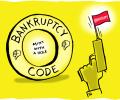
Among manufacturing companies that went to the National Company Law Tribunal (NCLT), chemicals and metal firms witnessed more resolutions while companies in the labour intensive (employment friendly) leather and textile sectors mostly get liquidated, reports Abhishek Waghmare.

'The recent correction in indices has made the markets cheaper to invest for the long term.'

Kotak Bank was the top loser in the Sensex pack, shedding over 2 per cent, followed by ICICI Bank, PowerGrid, HDFC, IndusInd Bank and Axis Bank. NSE Nifty declined 45.75 points to 16,568.85.

As the country moves towards creating a spot gold exchange, markets regulator Sebi's whole time member G Mahalingam on Wednesday suggested routing all the imports of the precious metal through the exchange ecosystem in the future. Such a "funnelling" would ensure that gold monetisation takes place right at the source as the metal enters the country, he said while addressing a conference organised by industry lobby Ficci. However, he also noted that the issue has not been dealt with in the papers floated by Sebi.

'For our traditional membership base, it would be an access to disruptive ideas,' FICCI President Subhrakant Panda tells Asit Mishra/Business Standard.

The Centre is pushing for bilateral trade with Cuba and its settlement in rupee as a part of its strategy to internationalise the domestic currency. A delegation from Cuba, including officials from its central bank, met Indian government officials and banks last month to discuss bilateral trade and settlement using the Reserve Bank of India's (RBI's) payment mechanism in rupee, said people aware of the matter. Since the Cuban nation has opened up its economy and is looking to implement reforms to attract investments from India, Cuban banks have evinced interest in opening special rupee vostro accounts (SRVAs) with Indian banks.

Bharti Airtel was the top gainer in the Sensex pack, rising around 4 per cent, followed by Tech Mahindra, HDFC, Kotak Bank, M&M and HCL Tech. NSE Nifty advanced 21.85 points to 16,280.10.
'Over the next two quarters, markets will be guided by observing the earnings resilience of corporates during the second lockdown, progress of the monsoon and the damage, if any, to rural spending power due to the second wave.'

'Short term volatility is likely due to various factors, global and domestic; investors may use this as an opportunity to increase the allocation to equities.'

Buying a car, particularly a diesel-powered one, is set to pinch the customers' pockets even more from the next financial year, as the second phase of Bharat Stage VI (BSVI) emission norms kicks in. The rules require cars to be compliant with real driving emission (RDE) norms, which measure pollutants emitted by cars while they are being driven on the road, unlike in a laboratory test. The norms may increase the cost of producing diesel vehicles by nearly Rs 75,000 to Rs 80,000, and petrol-powered ones by Rs 25,000 to Rs 30,000, analysts said.

The total investor wealth in domestic stock markets soared by Rs 1.53 lakh crore as investors cheered energy reforms, including hike in natural gas prices.

BSE benchmark Sensex nursed losses on Friday as investors pocketed gains after a five-session winning streak amid a bearish trend overseas. A depreciating rupee and foreign fund outflows further soured risk sentiment, traders said. The 30-share gauge, which had started the trade on a firm note, soon gave up all the gains and finally ended 651.85 points or 1.08 per cent lower at 59,646.15. The broader NSE Nifty snapped its eight-day rally to close at 17,758.45, down 198.05 points or 1.10 per cent.
The third-quarter financials didn't excite market watchers. But equity investors can still make money if they invest in the right stocks.

Rising prices of international coal - both coking and thermal - used in the making of ferrous and non-ferrous metals, respectively, are expected to have an impact on margins of metals companies in July-September quarter (Q2) as steel companies may see margins getting eroded, while the base firms could stand to benefit, said brokerages.

The analysis is based on the free-float market capitalisation.

Equity investors became richer by over Rs 7.21 lakh crore as stock markets continued the rally for the second day on Wednesday. The 30-share BSE Sensex opened in the green on Wednesday and further jumped 1,469.64 points or 2.75 per cent to 54,893.73 during the day. It finally settled at 54,647.33, higher by 1,223.24 points or 2.29 per cent amid reports of diplomatic efforts to end Russia's attack on Ukraine. On Tuesday, it settled at 53,424.09, higher by 581.34 points or 1.10 per cent.

Investors widened their bets on optimism that upcoming general budget -- to be unveiled next month - would contain incentives for corporates, which will help boost the economy
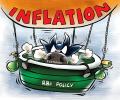
The RBI on Friday retained inflation forecast for FY23 at 6.7 per cent amid uncertain price trajectory on "geopolitical shocks" and on hope that inflationary pressures would ease with pick-up in kharif sowing and supply chain improvements. In its previous monetary policy review in June, it had projected retail inflation for 2022-23 at 6.7 per cent, higher from 5.7 per cent forecast in April. The six-member Monetary Policy Committee (MPC) unanimously decided to raise the benchmark repo rate by a steep 50 basis points to 5.40 per cent with immediate effect to tame inflation while supporting growth.
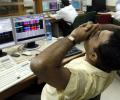
Equity investors became poorer by over Rs 9.75 lakh crore in two days of heavy decline in the equity market, with the Sensex plunging 1,457 points on Monday. The 30-share BSE benchmark tanked 1,456.74 points or 2.68 per cent to settle at 52,846.70 on Monday. It had ended 1,016.84 points or 1.84 per cent lower at 54,303.44 on Friday.
IndusInd Bank was the top gainer in the Sensex pack, rallying over 7 per cent, followed by SBI, ICICI Bank, HDFC twins, Axis Bank, Bajaj Finserv and UltraTech Cement. NSE Nifty soared 245.35 points to 14,923.15.
Equity indices made an emphatic comeback on Friday after falling for seven straight sessions after the RBI hiked interest rates by 50 basis points on expected lines and projected inflation coming under control from January next year. A strong recovery in the rupee added to the momentum, traders said. Overcoming a wobbly start, the 30-share BSE Sensex soared 1,016.96 points or 1.80 per cent to settle at 57,426.92. During the day, it rallied 1,312.67 points or 2.32 per cent to 57,722.63.
 © 2026 Rediff.com - Advertise with us - Disclaimer - Privacy Policy - Sitemap - Feedback - About us - Terms of use - Grievances